
EU-SOLARIS Annual Awards 2026: Recognising Excellence in CST Research Infrastructures
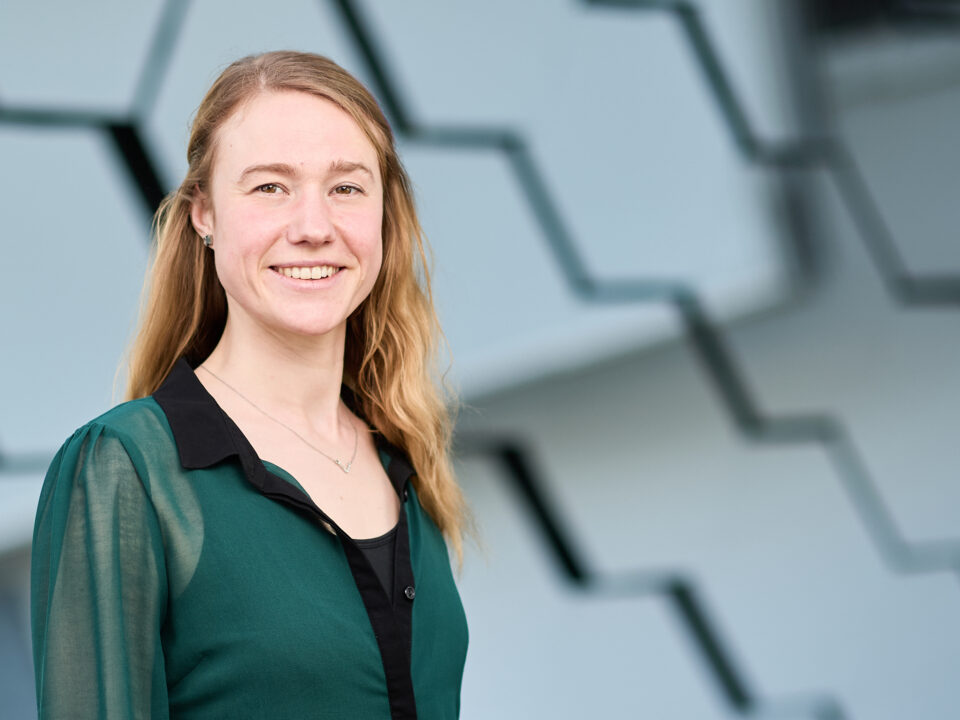
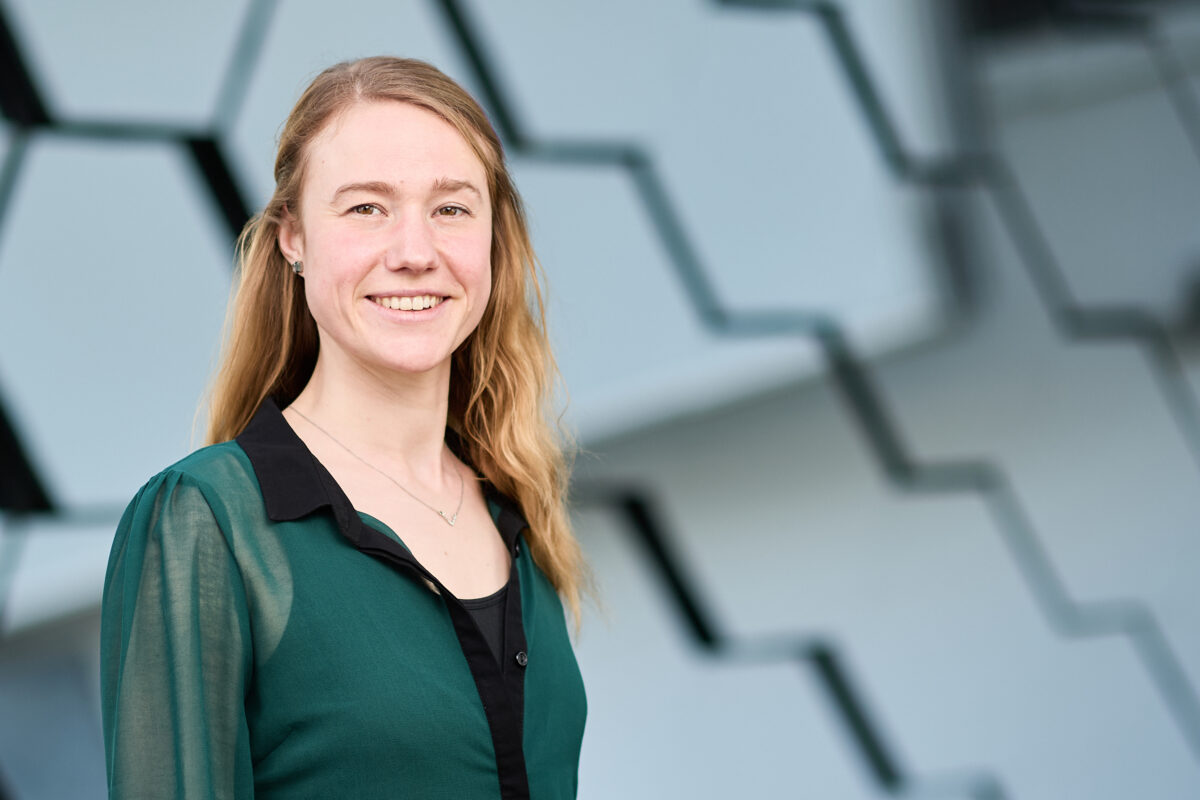
July 29, 2026EU-SOLARIS ERIC is pleased to announce that Dr. Mathias Kuhl, Research Associate at German Aerospace Center (DLR), Institute of Solar Research, Cologne, has been selected as the recipient of the EU-SOLARIS Annual Award 2026 for Best Doctoral Thesis on CST-related Topics.

This award recognises outstanding doctoral research that contributes to advancing the knowledge, development, and application of Concentrating Solar Technologies (CST). It celebrates scientific excellence, innovation, and the efforts of early-career researchers whose work helps address key challenges and opportunities in the field of solar thermal energy.
The awarded thesis, “A Data-Driven Methodology for Precision Flux Density Predictions for Heliostat Fields”, was distinguished by its scientific quality, originality, and relevance to the CST community. The selection committee highlighted the significance of the research findings, their contribution to the advancement of the field, and their potential to support future developments in CST technologies and applications.
By recognising exceptional doctoral work, EU-SOLARIS aims to promote excellence in research, encourage the next generation of scientists and engineers, and showcase the important role that doctoral research plays in driving innovation and supporting the energy transition.
In the following interview, Dr. Mathias Kuhl reflects on the motivation behind the research, the main challenges encountered throughout the PhD journey, the key findings of the thesis, and the future perspectives arising from this work. The discussion also offers valuable insights into the opportunities and challenges facing CST research in the years ahead.
Insights from the Award Winner
Name: Dr. Mathias Kuhl
Position: Researcher Associate
Department: German Aerospace Center (DLR) Institute of Solar Research Concentrating Solar Technologies
Award Category: Best Doctoral Thesis on CST-related Topics.
Awarded Thesis: “A Data-Driven Methodology for Precision Flux Density Precision for Heliostat Fields”
Supervisors: Prof. Dr. Ing. Robert Pitz-Paal – Thesis Advisor and Dr. Daniel Maldonado Quinto – Scientific Supervisor.
"I am very honored to receive this award. It recognizes several years of research and the collective support of my supervisors, colleagues, and project partners. I also see it as recognition of the growing importance of data-driven methods in concentrating solar technologies."
Mathias Kuhl
What motivated you to pursue research in the field of Concentrating Solar Technologies (CST)?
CST is particularly interesting because thermal energy storage enables dispatchable renewable electricity and high-temperature heat. This heat can also be used for industrial processes, solar fuels, and thermochemical applications.
What especially attracted me was the opportunity to improve these plants through smart algorithms and data-driven modeling, not just the physical plant design, but the “intelligence” layer that helps run it better.
Could you briefly introduce your doctoral thesis and its main objectives?
My thesis, “A Data-Driven Methodology for Precision Flux Density Predictions for Heliostat Fields”, developed a scalable method for predicting heliostat focal spots and receiver flux distributions using routine heliostat calibration images.
Customized UNet, StyleGAN, and Transformer neural network architectures were adapted to extract flux information, learn heliostat behavior, and predict flux distributions for different sun positions and aim points. The field-wide models use data from the entire heliostat field and are designed for robust and practical integration into plant operation.
What challenge or knowledge gap was your research aiming to address?
Accurate flux prediction traditionally requires detailed physical models, including detailed heliostat surface modeling, and measurement-intensive methods such as deflectometry or photogrammetry.
My research replaces this workflow with an end-to-end data-driven approach based solely on calibration images already recorded during routine heliostat calibration using the camera-target method. Instead of reconstructing complete mirror geometries, the models learn the heliostat properties that are directly relevant for focal spot prediction.
"By reducing the effort required to characterize large heliostat fields, the methodology supports improved receiver monitoring, digital twins, automated aimpoint optimization, and increasingly autonomous plant operation."
Mathias Kuhl
What potential impact could your work have on industry, research infrastructures, or society?
For industry, the approach can reduce the cost and complexity of heliostat characterization and plant operation.
For research infrastructures, it provides a basis for testing advanced control and automation strategies. More broadly, improved efficiency and operability can support the wider use of CST for dispatchable electricity, industrial heat, solar fuels, and thermochemical processes.
Looking back, what has been the most rewarding aspect of your PhD journey?
The most rewarding aspect was applying and testing the methods at a real solar tower facility, the Solar Tower Jülich. Seeing machine-learning models work under realistic plant conditions and contribute to practical operation made the research feel directly relevant rather than purely academic.
What are your current research interests and future plans?
My current research focuses on autonomous CST plant operation, particularly the combination of learned optical models, optimization, monitoring, and closed-loop aimpoint control. I am also interested in transferring these methods to other CST plants and process systems.
"I see the greatest opportunity in making CST plants more efficient, robust, and cost-effective, enabling them to provide reliable high-temperature heat for a broad range of applications."
Mathias Kuhl
What would you consider the most significant findings or achievements of your work?
I’d say the most significant achievement was showing that flux prediction models trained purely on operational data can match or even outperform the accuracy of traditional physics-based approaches, like deflectometry-enhanced ray tracing, without the overhead of dedicated measurement campaigns and complex modeling. This was validated using real operational data from Solar Tower Jülich and resulted in several peer-reviewed publications.
How do your research results contribute to the advancement of CST technologies?
Accurate flux prediction is essential for safe receiver operation and effective aimpoint control.
By reducing the effort required to characterize large heliostat fields, the methodology supports improved receiver monitoring, digital twins, automated aimpoint optimization, and increasingly autonomous plant operation.
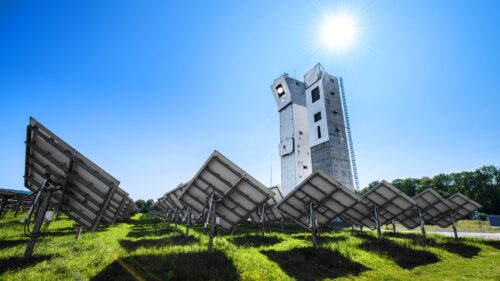
Solar Tower Jülich facilities in Cologne
Are there any ongoing projects or collaborations that build upon the work presented in your thesis?
The work directly supports current research on autonomous aimpoint control at the Solar Tower Jülich, including the SOLEA Solar Energy Autopilot.
It is also connected to the PAINT database, which makes operational CST data available for reproducible and data-driven research.
What do you see as the most promising research directions for CST in the coming years?
I see the greatest opportunity in making CST plants more efficient, robust, and cost-effective, enabling them to provide reliable high-temperature heat for a broad range of applications.
Learn more
How can interested readers learn more about your work?
- Dissertation:
Mathias Kuhl, A Data-Driven Methodology for Precision Flux Density Predictions for Heliostat Fields
https://doi.org/10.18154/RWTH-2026-03834
- Publications:
Kuhl et al., Solar Energy, 2025
Receiver-level flux prediction using a field-wide Transformer model.
https://doi.org/10.1016/j.solener.2025.113631
Kuhl et al., Solar Energy, 2024
Data-driven focal-spot prediction using a modified StyleGAN.
https://doi.org/10.1016/j.solener.2024.112894
Kuhl et al., Solar Energy, 2024
UNet-based extraction of flux distributions from calibration images.
https://doi.org/10.1016/j.solener.2024.112811
Phipps et al., Nature Energy, 2026
The PAINT database for FAIR operational CST data.
https://doi.org/10.1038/s41560-026-02070-1
About the EU-SOLARIS Annual Awards
To learn more about the EU-SOLARIS Annual Awards, please visit: EU-Solaris – Annual Awards.
The next edition of the awards will be launched in 2027. We encourage researchers, infrastructure managers, engineers, technical experts, and organisations active in the CST field to stay tuned for future announcements and participation opportunities.